


























For any city, shopping center, or public space, choosing between light-emitting diode (LED) and incandescent holiday lights goes beyond aesthetics. It’s about creating spectacular seasonal celebrations while making smart financial decisions. You want to transform your space into a festive destination that draws crowds and builds community excitement, while justifying every investment to stakeholders watching the budget.
Let’s break down how LED and incandescent lights really compare, from up-front costs to durability, so you can make a decision that feels right for your community and your budget.
LED vs. Incandescent Holiday Lights
Both technologies create beautiful illumination, but their real-world performance tells very different stories about their lasting value and reliability.
Here’s how they stack up in the following areas:
- Initial cost: Incandescent bulbs generally cost less up front, but LED technology wins on long-term value when you account for replacement frequency, energy bills, and labor.
- Energy consumption: LED Christmas lights use at least 75% less energy than incandescent bulbs, resulting in dramatically lower electric bills throughout the season.
- Running costs: Powering incandescent installations can cost significantly more than LED setups over a single holiday season. LED lighting can save approximately $225 in energy costs each year.
- Heat output: Incandescent bulbs release about 90% of their energy as heat, while LEDs remain cool to the touch — a critical safety advantage.
- Durability and lifespan: LED Christmas lights are more durable, with lifespans up to 25 times longer than traditional bulbs.
- Safety profile: Minimal heat production from LEDs lowers the fire risks associated with hot incandescent bulbs, reducing liability concerns.
The Cost of LED vs. Incandescent Holiday Lights
Determining the cost of holiday lights means looking beyond the price tag. The real question is what you’ll invest in over the lifetime of your celebration.
The Up-Front Price Tag
Incandescent bulbs typically cost less at purchase than their LED counterparts. At first glance, this makes traditional bulbs seem budget-friendly, especially for large installations that require thousands of lights.
However, those initial savings are misleading. The bulb cost represents just a fraction of what you’ll actually spend. Factor in the energy consumed over weeks of nightly operation, the labor hours spent replacing failed bulbs mid-season, and the need to purchase entirely new sets every few years due to burnouts. Those up-front savings evaporate quickly. Smart planning examines the complete financial picture, and that’s where energy-efficient commercial Christmas lights deliver their real value.
The Operational Expense
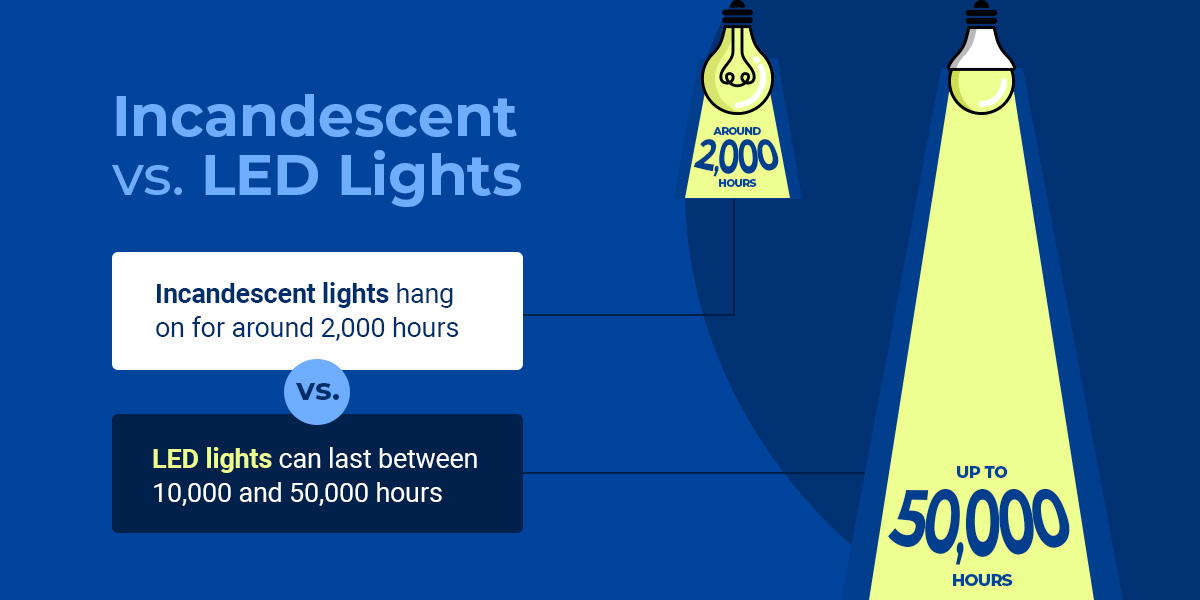
The most striking difference between these technologies shows up on your monthly utility statement. LED lights can last between 10,000 and 50,000 hours, whereas incandescent lights hang on for around 2,000 hours.
Those numbers become even more compelling when many installations run for longer hours or use significantly more bulbs. You can calculate your seasonal energy costs using an online calculator, or explore detailed breakdowns with Rocky Mount’s holiday lighting calculator to see what you’ll keep in your budget based on your specific setup size and run time.
The Hidden Expenses
Beyond the electric bill, another category that catches many operations off guard is the labor and equipment expenses associated with maintenance. How much do incandescent festive lights cost compared to LED when you factor in these soft costs?
If you’ve managed an incandescent display before, you know the frustration — bulbs burning out, unexpected dark patches, and urgent calls for quick fixes. It can take the joy out of what should be a celebration. Each service call requires dispatching maintenance crews, sometimes with specialized equipment such as bucket trucks or aerial lifts, to locate and replace failed bulbs. For cities and large properties, this translates to dozens of hours of unplanned labor and significant equipment expenses.
The Operational Advantages of Commercial-Grade LEDs
While the financial case for commercial LED holiday lighting is compelling on its own, the benefits extend well beyond the bottom line. For the professionals responsible for maintaining safe, reliable, and impressive celebrations throughout the season, these advantages matter just as much as the budget savings:
- Significant energy cost reduction: High-quality LED installations consume dramatically less electricity than incandescent lights. This translates to substantial savings, particularly for large-scale setups that run for extended periods during the holiday season.
- Minimized maintenance and labor costs: LED technology drastically reduces the need for bulb replacements. Less labor for maintenance crews, fewer service calls, and reduced reliance on specialized equipment frees up resources and lowers ongoing expenses.
- Superior durability and reliability: Designed with weather-resistant materials and epoxy lenses, professional-grade LED lights are far more resilient to impact, vibration, and harsh weather conditions than glass incandescent bulbs. This inherent toughness leads to fewer failures. Products like commercial-grade panel Christmas trees showcase this durability advantage in action.
- Enhanced safety profile: Because it produces very little heat, LED technology decreases the fire risks associated with hot incandescent bulbs. This safety advantage is crucial for public spaces, reducing potential hazards to property and people. The National Fire Protection Association’s holiday decorating safety tips emphasize the importance of cool-running lights to prevent seasonal fires.
- Consistent illumination and visual quality: Does Christmas look better with incandescent or LED lights? LED lights have brighter, more uniform, and consistent light output throughout their lifespan. From a design perspective, LEDs ensure your holiday celebration maintains its intended visual impact and aesthetic appeal from opening night through the final evening of the season.
- Greater scalability and design flexibility: The low power draw allows for more lights to be run on fewer circuits, simplifying installation and enabling more expansive and intricate designs without overwhelming electrical systems. This provides greater creative flexibility in designing and expanding celebrations as your vision grows. The best holiday lights for businesses are those that combine longevity with creative possibilities.
Get Long-Lasting Holiday Lights From Mosca Design
For cities, shopping centers, and public spaces, LEDs are an excellent option. The return on investment is clear through massive energy savings, drastically reduced maintenance needs, and superior durability that keeps celebrations running reliably year after year. Factor in safety advantages and the flexibility to scale your designs, and the case becomes even stronger.
Mosca Design has been helping communities and properties create unforgettable holiday experiences for over 40 years. We bring decades of expertise and a proven track record to every project, specializing in designing and implementing modern, cost-effective LED installations that transform spaces while respecting your budget. Our consultative approach means we work with you from concept to installation, ensuring your celebration delivers the lasting visual impact your community deserves.
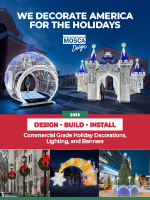
Browse our catalog or contact our design experts — we’re here to help you plan a celebration that delivers lasting value.

For any city, shopping center, or public space, choosing between light-emitting diode (LED) and incandescent holiday lights goes beyond aesthetics. It’s about creating spectacular seasonal celebrations while making smart financial decisions. You want to transform your space into a festive destination that draws crowds and builds community excitement, while justifying every investment to stakeholders watching the budget.
Let’s break down how LED and incandescent lights really compare, from up-front costs to durability, so you can make a decision that feels right for your community and your budget.
LED vs. Incandescent Holiday Lights
Both technologies create beautiful illumination, but their real-world performance tells very different stories about their lasting value and reliability.
Here’s how they stack up in the following areas:
- Initial cost: Incandescent bulbs generally cost less up front, but LED technology wins on long-term value when you account for replacement frequency, energy bills, and labor.
- Energy consumption: LED Christmas lights use at least 75% less energy than incandescent bulbs, resulting in dramatically lower electric bills throughout the season.
- Running costs: Powering incandescent installations can cost significantly more than LED setups over a single holiday season. LED lighting can save approximately $225 in energy costs each year.
- Heat output: Incandescent bulbs release about 90% of their energy as heat, while LEDs remain cool to the touch — a critical safety advantage.
- Durability and lifespan: LED Christmas lights are more durable, with lifespans up to 25 times longer than traditional bulbs.
- Safety profile: Minimal heat production from LEDs lowers the fire risks associated with hot incandescent bulbs, reducing liability concerns.
The Cost of LED vs. Incandescent Holiday Lights
Determining the cost of holiday lights means looking beyond the price tag. The real question is what you’ll invest in over the lifetime of your celebration.
The Up-Front Price Tag
Incandescent bulbs typically cost less at purchase than their LED counterparts. At first glance, this makes traditional bulbs seem budget-friendly, especially for large installations that require thousands of lights.
However, those initial savings are misleading. The bulb cost represents just a fraction of what you’ll actually spend. Factor in the energy consumed over weeks of nightly operation, the labor hours spent replacing failed bulbs mid-season, and the need to purchase entirely new sets every few years due to burnouts. Those up-front savings evaporate quickly. Smart planning examines the complete financial picture, and that’s where energy-efficient commercial Christmas lights deliver their real value.
The Operational Expense
The most striking difference between these technologies shows up on your monthly utility statement. LED lights can last between 10,000 and 50,000 hours, whereas incandescent lights hang on for around 2,000 hours.
Those numbers become even more compelling when many installations run for longer hours or use significantly more bulbs. You can calculate your seasonal energy costs using an online calculator, or explore detailed breakdowns with Rocky Mount’s holiday lighting calculator to see what you’ll keep in your budget based on your specific setup size and run time.
The Hidden Expenses
Beyond the electric bill, another category that catches many operations off guard is the labor and equipment expenses associated with maintenance. How much do incandescent festive lights cost compared to LED when you factor in these soft costs?
If you’ve managed an incandescent display before, you know the frustration — bulbs burning out, unexpected dark patches, and urgent calls for quick fixes. It can take the joy out of what should be a celebration. Each service call requires dispatching maintenance crews, sometimes with specialized equipment such as bucket trucks or aerial lifts, to locate and replace failed bulbs. For cities and large properties, this translates to dozens of hours of unplanned labor and significant equipment expenses.
The Operational Advantages of Commercial-Grade LEDs
While the financial case for commercial LED holiday lighting is compelling on its own, the benefits extend well beyond the bottom line. For the professionals responsible for maintaining safe, reliable, and impressive celebrations throughout the season, these advantages matter just as much as the budget savings:
- Significant energy cost reduction: High-quality LED installations consume dramatically less electricity than incandescent lights. This translates to substantial savings, particularly for large-scale setups that run for extended periods during the holiday season.
- Minimized maintenance and labor costs: LED technology drastically reduces the need for bulb replacements. Less labor for maintenance crews, fewer service calls, and reduced reliance on specialized equipment frees up resources and lowers ongoing expenses.
- Superior durability and reliability: Designed with weather-resistant materials and epoxy lenses, professional-grade LED lights are far more resilient to impact, vibration, and harsh weather conditions than glass incandescent bulbs. This inherent toughness leads to fewer failures. Products like commercial-grade panel Christmas trees showcase this durability advantage in action.
- Enhanced safety profile: Because it produces very little heat, LED technology decreases the fire risks associated with hot incandescent bulbs. This safety advantage is crucial for public spaces, reducing potential hazards to property and people. The National Fire Protection Association’s holiday decorating safety tips emphasize the importance of cool-running lights to prevent seasonal fires.
- Consistent illumination and visual quality: Does Christmas look better with incandescent or LED lights? LED lights have brighter, more uniform, and consistent light output throughout their lifespan. From a design perspective, LEDs ensure your holiday celebration maintains its intended visual impact and aesthetic appeal from opening night through the final evening of the season.
- Greater scalability and design flexibility: The low power draw allows for more lights to be run on fewer circuits, simplifying installation and enabling more expansive and intricate designs without overwhelming electrical systems. This provides greater creative flexibility in designing and expanding celebrations as your vision grows. The best holiday lights for businesses are those that combine longevity with creative possibilities.
Get Long-Lasting Holiday Lights From Mosca Design
For cities, shopping centers, and public spaces, LEDs are an excellent option. The return on investment is clear through massive energy savings, drastically reduced maintenance needs, and superior durability that keeps celebrations running reliably year after year. Factor in safety advantages and the flexibility to scale your designs, and the case becomes even stronger.
Mosca Design has been helping communities and properties create unforgettable holiday experiences for over 40 years. We bring decades of expertise and a proven track record to every project, specializing in designing and implementing modern, cost-effective LED installations that transform spaces while respecting your budget. Our consultative approach means we work with you from concept to installation, ensuring your celebration delivers the lasting visual impact your community deserves.
Browse our catalog or contact our design experts — we’re here to help you plan a celebration that delivers lasting value.